A ship of your own.
Block construction, equipment orientation, named blueprints and reusable modules. Assisted and inertial flight connect a design to the way it handles.
FROM THE WORKSHOP / DEVELOPMENT
Working systems. Small beginnings.
Room to find the right next step.
THE STARTING POINT
The first substantial loop starts with a ship, a finite source of material and a purpose. Mine it, refine it, manufacture something useful, then use that result to improve the operation.
Building, flying and industry should give each other meaning. The current work is about connecting those systems so that a better machine opens up a better way to work.
01 / THE WORKING FOUNDATIONS
PRESENT IN THE PROTOTYPE. STILL BEING REFINED.Block construction, equipment orientation, named blueprints and reusable modules. Assisted and inertial flight connect a design to the way it handles.
Finite mining, refining and manufacture. Physical cargo routes connect machines; energy, heat and storage give them practical limits.
Persistent worker jobs, travel, collection, docking and unloading. Fleet status and remote flight control let an operation reach beyond your own cockpit.
Component damage, armour, shields and constructed weapons. The work includes how the supporting power, cooling and supplies affect a vessel's capability.
A small private multiplayer slice is being tested alongside the offline world. This is an early foundation, with wider scale and online plans still open.
02 / NOTES FROM THE DRAWING BOARD
THE THINKING BEHIND THE SYSTEMS.A feature earns its place when it gives another part of the game something useful to do.
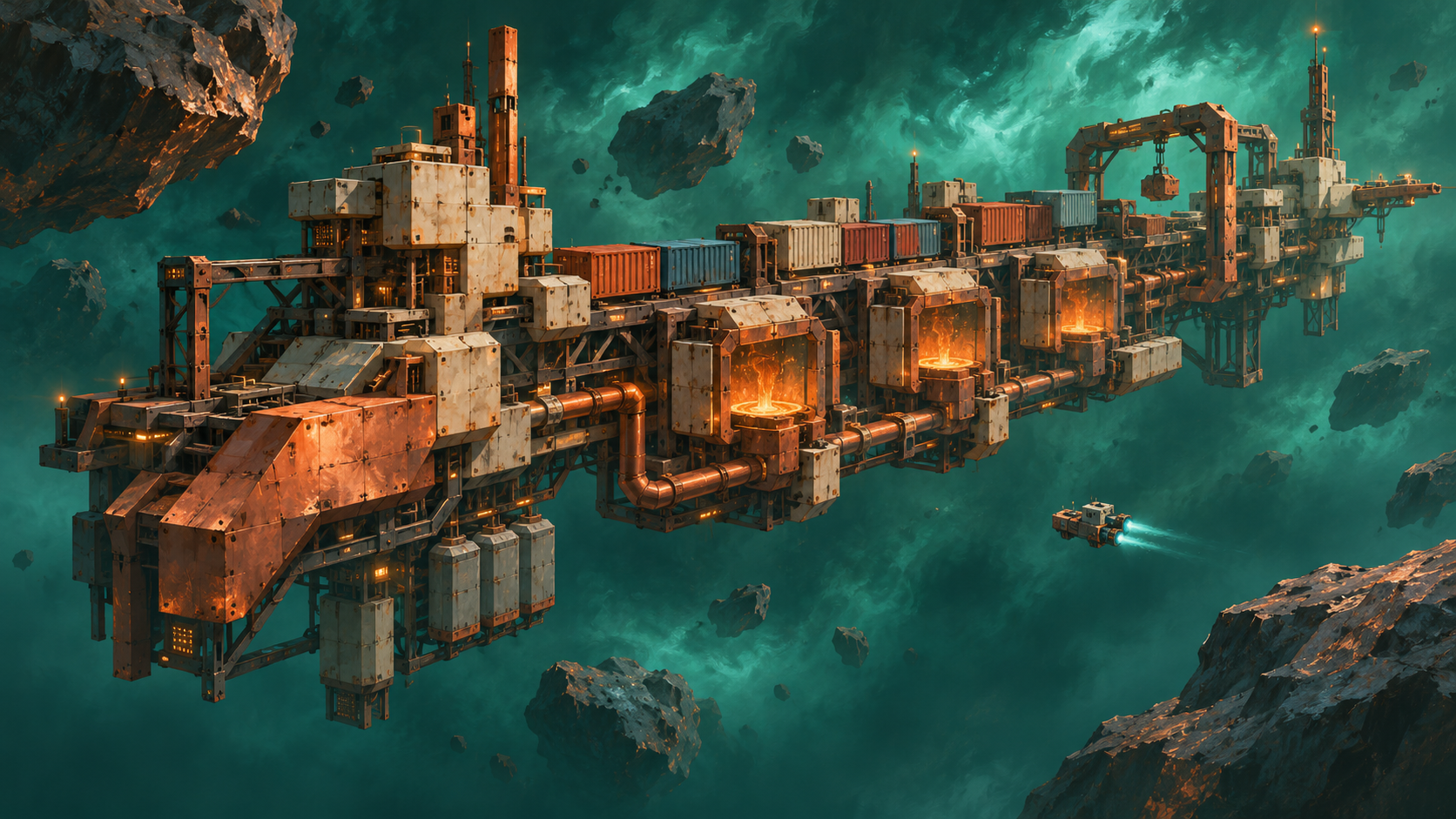
A production chain is easier to care about when its output answers a need. The miner brings home raw material. The refinery and fabricator turn it into equipment. The next ship gives that work a destination.
The prototype follows the material through physical cargo and machinery. Power, heat and available storage can interrupt the process, so building an operation also means understanding why it has stopped.
Explore the industry loopThe builder is only half of a ship-building game. A design should make sense in flight: where the engines point, what the tools can reach, how much cargo fits and which equipment needs protection.
Blueprints and reusable sections make it easier to keep useful ideas. Flight and working systems give the next version a question to answer. The aim is an ongoing conversation between the drawing board and the pilot's seat.
Explore ship buildingA worker ship should have a job you can follow. It travels to its source, collects what it can, returns, docks and unloads. That trip connects your machinery to the material it needs.
Remote flight control gives the pilot a way to intervene without replacing the worker's purpose. The current work explores that handover and return to work in a small test world. Final fleet size and wider-world behaviour are still being developed.
Explore the working fleet03 / BEYOND THE FIRST LOOP
The wider game is still taking shape. These are directions being explored, rather than a dated release schedule.
Travel, discovery and places that make gathering and moving material meaningful beyond the first test world.
Markets, services and a broader supply chain that give the ships and equipment you manufacture useful destinations.
Continue testing shared systems and their limits before making promises about player counts, world scale or official services.
A FIRST LOOK AT THE WORLD AROUND THE WORK
This preview site uses concept artwork and illustrative scenes while the game develops. If you are taking a first look, your impression of the idea—and the way the site explains it—is useful.